


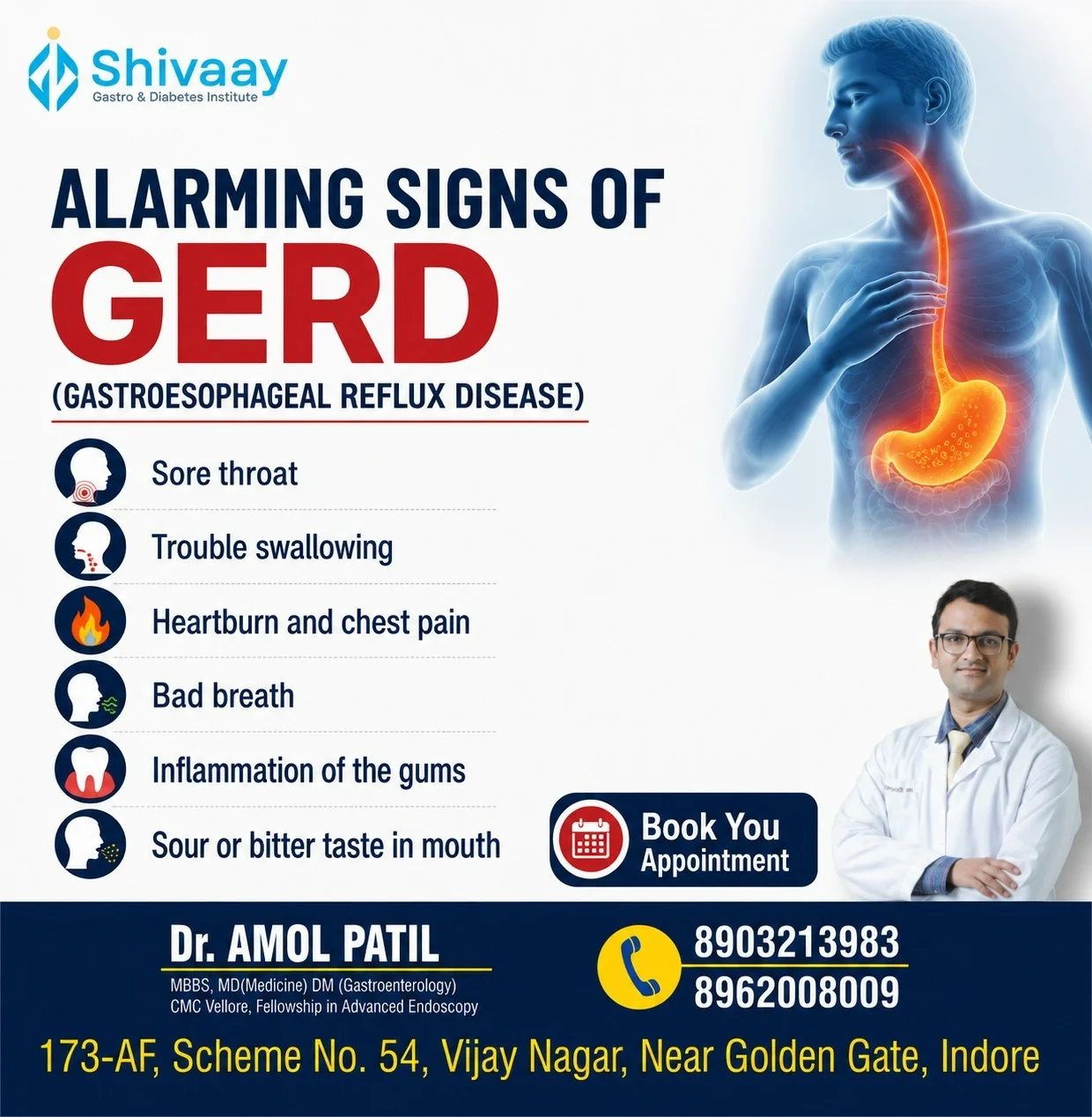
If you experience a burning sensation after eating, a sour taste when lying down, or constant discomfort that keeps you up all nite, daily life can be a struggle. These experiences are often called “acidity” and are dealt with for a time without knowing why they keep returning.
Heartburn that comes and goes is not the same as having ongoing reflux disease. If symptoms worsen, interfere with eating, or recur, a medical evaluation can help identify the cause and guide appropriate treatment.
If you want GERD treatment in Indore then Dr. Amol Patil is available for consultation at Shivaay Gastro & Diabetes Institute. The first step in deciding what to do next is to have a full discussion about the symptoms, previous treatments and medical history.
What Is GERD?
Gastroesophageal reflux disease (GERD) is when stomach contents flow back (reflux) into the esophagus on a regular basis. The reflux can cause problems or damage. The tube that carries food from the mouth to the stomach is called the esophagus.
Near its lower end is a muscular valve which normally prevents this backflow. Reflux can occur if that valve isn’t working properly.
Regurgitation and heartburn are common symptoms but not necessarily diagnostic. Other explanations are to be considered by the clinician.
Recognizing Common Reflux Symptoms
It is better to understand the behavior of your pain than to label all digestive complaints as acidity.
Heartburn and Regurgitation
Heartburn is typically described as a burning sensation in the center of the chest. Regurgitation is the back-up of stomach contents toward the mouth or throat and may sometimes taste acidic.
When you discuss these symptoms, also mention if they occur during specific activities, after eating, or if they interfere with your sleep.
Swallowing and Sore Throat Issues
Some people also have chronic coughing, hoarseness or difficulty swallowing, in addition to reflux. Do not automatically associate these symptoms with GERD; they may have other causes.
Similarly, you don’t diagnose reflux based on bad breath or sore gums. Tell your health care provider about each mouth symptom separately so that a dental evaluation can be arranged.
The First Warning Signs?
Arrange for a timely medical assessment of:
• Pain or difficulty with swallowing.
• Weight loss that is unexplained.
• Vomiting all the time.
• Loss of appetite that goes with continuing symptoms.
Call 911 if you have blood in your vomit, vomit that looks like coffee grounds, or black, tarry stools. Regular acidity cures don't cure these symptoms.
Don’t Blame Acidity For Chest Pain Automatically
Sudden or persistent chest pain, especially with dyspnea, sweating, dizziness or radiation of pain to the arm, jaw, neck or back requires urgent assessment. Pain from the heart may simulate dyspepsia.
Don’t wait for a gastroenterologist appointment or try an antacid – get emergency care right away.
What are the Symptoms and Signs of GERD?
What happens during the GERD consultation? The doctor will usually begin by discussing your symptoms and medical history. The doctor will ask how often the pain occurs, what triggers it and if any past medications have helped.
Not everyone needs an investigation right now. The clinician may recommend treatment initially and then see how the response is from the assessment.
Tests are more useful when symptoms suggest complications or another condition or when the first treatment strategy hasn’t worked. Upper gi endoscopy or reflux monitoring are possible . Reflux monitoring assesses reflux exposure whereas endoscopy allows investigation of the upper digestive tract.
If a test is recommended, learn what question it will answer and how the result may influence your course of therapy.
What Does GERD Treatment Include?
In deciding on an acid reflux treatment the clinical findings, the symptom pattern and the response to previous treatments are all considered.
Alterations to daily routines
A doctor may suggest changes to diet, sleep or weight if necessary. The plan might also include stopping smoking.
Pharmaceuticals
H2 blockers and antacids and proton pump inhibitors have a different role in the treatment of reflux. Talk to your healthcare provider about the right medication, dose, when to take it, and for how long.
If you buy medication regularly and do not monitor it, you may find that your chronic symptoms are poorly evaluated.
Protocols for Specific Patients
With appropriate evaluation, surgery or other antireflux measures may be recommended in selected situations. Not everyone with heartburn needs them.
Before you leave your appointment, make sure you know what the plan of action is and when the success will be measured.
Eating With Reflux: Pay Attention to Your Own Pattern
It is not necessary to assume that all sufferers of reflux have to abide by the same guidelines. Some people find that symptoms are worsened by certain foods and drinks, while others do not.
Common triggers that are often cited are high fat foods, spicy foods, coffee, wine, chocolate and acidic foods. If you know your patterns, it can help you make more targeted adjustments.
Eating at least three hours before lying down may help problems during the nite. Talk with your doctor about any changes you may need to make, especially if you have other nutritional needs.
For someone in Indore who is juggling a hectic schedule, practical questions could be the most helpful kind of conversation: Is it time for dinner before bed? Are there particular restaurant foods that are linked with symptoms? Is the discomfort level of working days different from that of weekends?
Take those observations to the meeting. You do not have to know the diagnosis to get specific information from them.
Boost Your Productivity in Consultations
When booking an appointment with an Indore Gastroenterologist, give a quick overview of your recent experiences including:
• When the symptoms first started.
• How frequent they are.
• If sleep or swallowing is affected.
• History of tested medications and outcomes.
• Previous prescriptions or endoscopies.
• Your main questions about research and therapy.
Not every episode should be gas. Describe the location and nature of the discomfort in your own words. You may have burning, pressure, food coming back up, and trouble swallowing.
At the end of the visit you can also state your expectations in writing. Setting clear priorities helps keep the conversation on track.
Frequently Asked Questions
1. Is GERD always caused by recurrent heartburn?
No, but other things can cause similar symptoms and recurrent heartburn needs to be evaluated. The physician takes into account the patient’s entire medical history when deciding if treatment, testing or further examination is needed.
2. Is an endoscopy absolutely necessary?
Not always. A lot of people are initially evaluated by their symptoms and medical history. Endoscopy could be advised when there are warning indications, possible problems or symptoms that don’t go away despite therapy.
3. Will changing your diet help the reflux?
These may be helpful, especially if you modify your own triggers and the timing of your eating. Rather than increasingly stringent self-directed diets, persistent symptoms still warrant a medical evaluation.
4. How long does it take to treat GERD?
The length of treatment differs. Some people can have their strategy changed after assessment but others need constant supervision. Ask when it is best to reassess medication and do not change prescribed treatment yourself.
Learn More About Acid Reflux (GERD)
Persistent discomfort necessitates a proper care plan and explanation. Knowing your symptoms can help you feel more confident about meals, sleep and treatment.
To know more about the GERD treatment in Indore, contact Dr. Amol Patil at Shivaay Gastro & Diabetes Institute.
Call us today to schedule your appointment.
| Tags: | #GERD Treatment in Indore |


