


An ultrasound report mentioning fatty liver can leave you uncertain about what to do next. You may feel completely well, have no digestive complaints and wonder whether the finding needs attention. Others immediately begin restrictive diets or buy supplements without understanding the underlying problem.
Fatty liver treatment in Indore starts with identifying why fat has accumulated in the liver and assessing whether inflammation or scarring is present. Treatment then focuses on the individual’s liver health, metabolic risk factors and practical changes that can be maintained over time.
If a recent investigation has raised concerns, a consultation with Dr. Amol Patil can help you discuss your findings and understand the appropriate next steps. The important question is not simply whether liver fat is present, but what it means for your health.
Fatty liver disease means that excess fat has accumulated within liver cells. It can occur in different settings, including metabolic conditions and alcohol-related liver disease.
You may see the term metabolic dysfunction-associated steatotic liver disease, or MASLD, in newer reports and medical discussions. This describes liver fat associated with metabolic risk factors. Older records commonly use the term non-alcoholic fatty liver disease, or NAFLD.
Some people have fat accumulation without significant liver injury. Others develop inflammation and, over time, scarring called fibrosis. Advanced scarring is known as cirrhosis.
These outcomes are not inevitable. Assessment helps distinguish people who need routine monitoring from those who require closer specialist care.
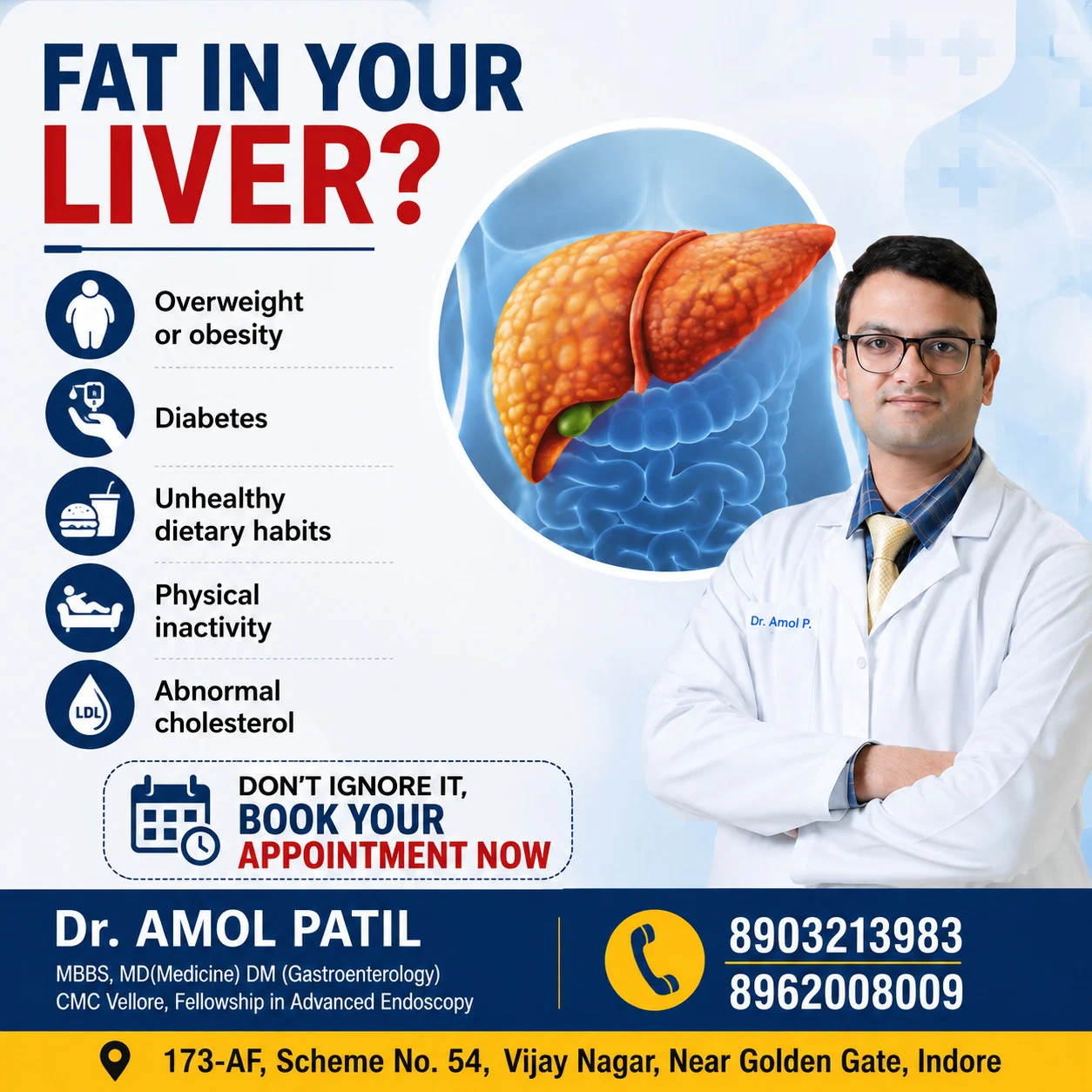
Several factors can increase the likelihood of liver fat accumulation. They often occur together, making a broader health review useful.
Commonly associated factors include:
· Excess body weight, particularly around the waist.
· Type 2 diabetes or insulin resistance.
· High triglycerides or other cholesterol abnormalities.
· High blood pressure.
· Limited physical activity.
· Dietary patterns that contribute to excess calorie intake.
Having one of these factors does not establish a diagnosis. Equally, body size alone cannot determine whether someone has liver disease.
Share your medical history, alcohol intake and current medicines honestly with your clinician. This information helps identify possible causes and avoids treating every abnormal liver report in the same way.
No. Fatty liver symptoms are often absent, especially before advanced disease develops. Many people discover the condition during imaging or blood tests performed for another reason.
Some experience tiredness or discomfort beneath the ribs on the right side. However, these complaints have many possible explanations and cannot confirm fatty liver by themselves.
Feeling healthy should not become a reason to ignore an abnormal report. At the same time, ordinary bloating or acidity should not automatically be blamed on the liver.
A medical assessment connects the test findings with your overall health rather than relying on symptoms alone.
Ultrasound reports may describe fatty liver as grade 1, 2 or 3. These descriptions relate to its appearance on the scan; they do not directly establish the amount of liver scarring.
A mild ultrasound finding still deserves interpretation alongside diabetes status, blood results and other risk factors. Conversely, a higher ultrasound grade does not by itself prove cirrhosis.
When discussing your report, ask:
· Does this investigation assess fat, scarring or both?
· Do my other health conditions increase my risk?
· Is further testing necessary?
· What should we monitor during follow-up?
Understanding the distinction between fat and fibrosis makes the report more useful.
A fatty liver evaluation usually includes a medical history, physical assessment and review of previous investigations. Your clinician may check weight, waist measurement and blood pressure.
Testing may include liver enzymes, a blood count, glucose or HbA1c, and a lipid profile. Additional investigations depend on whether other causes of liver disease need assessment.
No single liver enzyme result provides the complete picture. Results should be interpreted together rather than judged in isolation.
Clinicians may use a calculation such as FIB-4 to estimate the likelihood of advanced fibrosis. This uses information including age, liver enzymes and platelet count.
Depending on the findings, a liver stiffness measurement, such as elastography, may be recommended. These tools help guide further assessment; they are not intended for self-diagnosis.
A liver biopsy is not required for everyone. It may be considered in selected circumstances when the diagnosis or severity remains uncertain and the result would influence treatment.
Fatty liver management is usually a continuing process rather than a short course of treatment followed by no further review.
For people with overweight or obesity, sustained weight reduction can improve liver fat and may also improve inflammation or scarring. Your doctor can help determine a suitable target.
Avoid crash diets. Rapid weight loss and inadequate nutrition can be harmful, and a restrictive plan is often difficult to maintain.
Discuss obstacles openly, whether they involve shift work, frequent travel, joint pain or limited time for cooking.
A fatty liver diet plan should address overall eating habits rather than promise benefits from one special food.
Useful changes to discuss include reducing sweetened beverages, adjusting portions and choosing more balanced meals. The plan should provide adequate nutrition and fit any diabetes or other dietary requirements.
For families in Indore, practical advice can work with familiar foods such as roti, dal, vegetables and rice. Ask how to adjust your existing meals instead of assuming every staple needs replacing.
Prepare specific questions about breakfast, office lunches or restaurant meals. Concrete examples make dietary guidance easier to apply.
Physical activity can benefit liver health even when weight changes slowly. Choose an approach suited to your fitness, mobility and medical conditions.
Walking, cycling or appropriate strength exercises may form part of the routine. If you have been inactive, discuss how to begin gradually.
A planned activity that fits your week is more useful than an ambitious schedule you cannot sustain.
Diabetes and fatty liver frequently occur together. Blood glucose, cholesterol and blood pressure therefore deserve attention alongside liver findings.
Medication decisions depend on the diagnosis, disease severity and other health needs. Do not stop existing prescriptions or start “liver detox” products independently. Some herbal preparations and supplements can injure the liver.
Alcohol advice should also be individualised. Ask directly whether you should avoid it, particularly if inflammation or scarring is present.
For fatty liver treatment in Vijay Nagar Indore, bring the complete ultrasound report, recent laboratory results and a list of medicines and supplements.
Write down any previous weight changes, diabetes history and earlier liver findings. Keeping reports in date order allows the clinician to compare them more easily.
Before leaving, clarify your treatment priorities, the timing of repeat tests and the next review date. Ask what improvement will be measured rather than relying only on how you feel.
Yes, liver fat can decrease with appropriate management. The degree of improvement depends on the cause, existing liver injury and sustained treatment. A guaranteed recovery timeline would be misleading.
You still need an assessment and an appropriate care plan. Fatty liver can be present without discomfort, so symptoms alone cannot determine its significance.
No. Fat accumulation and advanced scarring are different findings. Your clinician may recommend additional assessment to establish whether fibrosis is present.
No. They cannot reliably determine or treat the cause of liver disease. Discuss any supplement before taking it, particularly when you already have abnormal liver reports.
An unexpected finding is an opportunity to understand your health and make informed changes. A clear assessment can help replace uncertainty with a manageable plan.
Contact Us Today to Book Your Liver Health Consultation.
| Tags: | #Fatty Liver Treatment in Indore |


